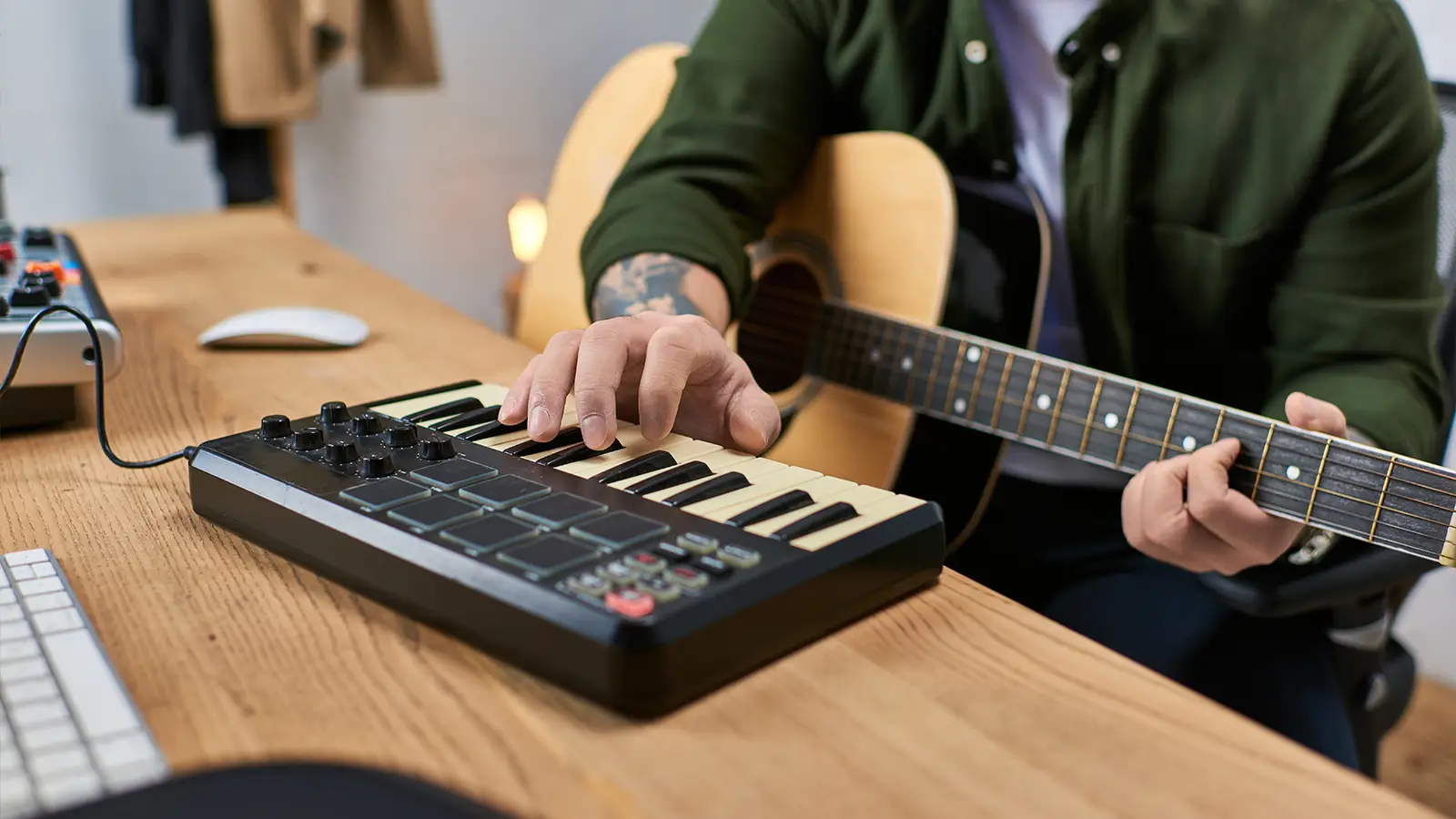
The Future of Music Education: Integrating Technology into Learning

Music education unites discipline with creativity and cultural growth. Music education throughout history depended on physical classrooms and acoustic instruments together with printed sheet music. Technology must integrate into music education because it represents an inevitable transformation that has become essential. Learning tools are reshaping music education through virtual classrooms and AI-assisted composition software that transforms educational experiences and teaching practices.
This paper investigates the transformation of music education through technological advancements in music and identifies new learning instruments that create an inclusive innovative future for education.
Why Technology Matters in Music Education
The educational transformation of every subject has reached music and all its related fields. Here’s why it matters:
- The use of technology makes superior music education accessible to students from disadvantaged locations and underfunded districts.
- Digital learning tools including interactive applications and educational games and platforms maintain student interest levels.
- The combination of AI technology provides students with individualized performance assessment as well as customized practice activities.
- Through cloud-based tools students along with their teachers can collaborate in real-time operations despite their geographical differences.
Music education transformed by technology creates educational experiences that are more dynamic while becoming more inclusive to serve today’s learners effectively.
Digital Tools Transforming Music Education
Modern music education experiences fundamental changes through various influential tools and technological advancements that transform musical learning and instruction methods.
1. Digital Audio Workstations (DAWs)
Examples: GarageBand, Ableton Live, FL Studio, Logic Pro
Students can create music compositions and record sound while editing audio files through digital audio workstation tools that operate directly on their equipment. The educational software DAWs offers practical experience to students who want to produce music or create sound effects because it allows them to learn about music elements in addition to theoretical knowledge.
Benefits:
- Encourages experimentation and creativity
- Develops real-world music production skills
- The system provides students with audio feedback about their sound arrangement.
2. Online Music Learning Platforms
The online learning platforms Yousician, Simply Piano, Soundtrap for Education and SmartMusic provide students with gamified musical lessons for multiple instruments and music theory together with sight-reading practice.
The educational software functions as an excellent combination of classroom-based teaching methods with individual learning approaches.
Benefits:
- Self-paced learning
- Real-time performance assessment
- The system delivers video tutorials along with interactive lessons to students.
3. Notation Software
Examples: Sibelius, Finale, MuseScore, Noteflight
Students who study composition or orchestration or arranging find digital notation software to be their essential tool for educational purposes. The platforms provide MIDI playback features alongside features for cloud-based content sharing.
Benefits:
- Enhances understanding of musical structure
- The quick playback system assists students with ear training skills.
- The composition tools enable multiple students to collaborate on their projects.
4. Virtual Instruments and Apps
Students can access the Jamstik and Artiphon INSTRUMENT 1 and Moog Model D app tools to discover new sounds across various musical genres through technology-based musical instruments without requiring costly equipment. Students who use MIDI controllers and sensor-based tools develop an interactive learning experience with sound exploration.
Benefits:
- Makes music creation more affordable
- The learning experience becomes less intimidating for new students because of this approach.
- The interface design allows students to develop curiosity because it uses simple controls.
5. Virtual Reality and Augmented Reality
The current emerging examples in VR Orchestra Simulations, Melodrive, The Music Room VR showcase the potential of these technologies.
Virtual reality and augmented reality applications enable students to control virtual orchestras while studying music theory in three-dimensional spaces and practicing instruments through fully immersive settings. The current tools demonstrate promising potential even though their development remains in its early stages.
Benefits:
- Enhances engagement through immersion
- The technology provides students with simulated opportunities to perform music.
- The educational approach benefits students who learn through touch and movement.
The Role of Artificial Intelligence in Music Learning
Artificial Intelligence is presently transforming music instruction into a new educational model for future students. Here’s how:
1. AI-Powered Feedback
The music learning platforms Tonara and Flowkey utilize artificial intelligence to analyze students’ pitch accuracy and rhythm while assessing tempo through instant feedback delivery. The immediate feedback system enables students to fix their mistakes promptly and motivates them to maintain consistent practice habits.
2. Personalized Learning Paths
AI algorithms change their difficulty settings to maintain lessons at appropriate levels that avoid discouragement of students.
3. Composition Assistance
The AI composition tools Amper Music and AIVA allow students to create music through their songwriting features which generate melody suggestions and full arrangements from minimal input.
Benefits of Integrating Technology into Music Education
1. Expanding Access and Equity
Technology acts as a bridge which connects schools with abundant music resources to those which have limited music resources. Students from disadvantaged areas can now get high-quality music instruction through mobile devices including smartphones and tablets.
2. Encouraging Self-Directed Learning
Through apps and platforms learners develop personal ownership of their musical development. The autonomy students experience helps increase their motivation while developing curiosity and building lifelong learning habits.
3. Cultivating 21st-Century Skills
The educational use of technology in music education provides students with the following benefits:
- Digital literacy
- The music production process develops students’ problem-solving abilities.
- Students collaborate with cloud-based shared projects.
- Through critical listening and analytical skills students develop.
4. Supporting Teachers, Not Replacing Them
Technology does not make music educators redundant because it enables them to better serve their students. The tracking features of these tools allow teachers to deliver customized instruction while reaching students who need different learning approaches.
Challenges of Tech Integration
The numerous advantages of technology in music education come with several challenges that students must face.
1. Digital Divide
Not every student possesses access to devices combined with reliable internet connectivity. The issue of equal technology access continues to be a major challenge.
2. Learning Curve for Educators
Teachers often experience difficulties because of their struggle to handle new educational tools and platforms. The implementation of technology in education requires continuous professional training for both success and effectiveness.
3. Over-Reliance on Screens
The educational use of technology brings benefits to students yet excessive screen time could potentially reduce the practice of hands-on learning and classic ensemble activities. A balanced approach is key.
Strategies for Effective Integration
The successful integration of technology in music education requires implementing these measures:
1. Start Small
Choose one appropriate educational platform or tool to start with because SmartMusic works for practice tracking and Noteflight supports composition projects.
2. Blend Traditional and Modern Methods
The implementation of technology should support traditional teaching methods instead of replacing them. Music sheet pages should be enhanced through playback applications or digital tools must be used to reinforce group musical performance.
3. Encourage Exploration
Students should have time to explore DAWs and try virtual instruments and create loop-based music compositions. The process of exploration leads students to achieve deeper learning outcomes.
4. Collaborate with Others
Educators must exchange their best practices through online forums together with professional groups and workshops. Students can work together on projects through the platform Soundtrap.
The Future Outlook: What’s Next?
The upcoming decade will bring multiple advancements to music education through:
1. AI Tutors
AI tutors provide context-specific feedback through real-time delivery which functions as individual music coaching for each student.
2. Augmented Reality Sheet Music
AR glasses serve two purposes by presenting sheet music and sheet music pages that react to live tempo adjustments and hand gestures.
3. Global Collaboration Projects
Student orchestras from different countries work together through cloud platforms to create international musical collaborations which eliminate geographical limitations in education.
4. Blockchain and Music Education
The implementation of blockchain credentialing systems enables students to prove their music course completion and skill mastery through secure digital certificates that maintain transparency.
Final Thoughts: Blending Creativity with Innovation
Music education is no longer confined to the conservatory or rehearsal hall. With a smartphone, tablet, or laptop, anyone can learn, practice, create, and perform music—anywhere and at any time.
Integrating technology in music education isn’t about abandoning tradition—it’s about expanding access, enriching learning, and preparing students for a musical world that is increasingly digital.
Whether you’re a music teacher looking to engage your class, a student exploring songwriting, or a school administrator planning curriculum upgrades—technology offers endless possibilities for growth.
The future of music education is here—and it’s in tune with innovation.