How to Pack Fragile Items: Safeguarding Your Valuables During the Move
Moving can be incredibly stressful, especially when it involves ensuring your fragile items make it to your new home in one piece. From delicate glassware to priceless heirlooms, one of the top moving-related anxieties anyone can have is the loss or damage of something valuable. But if planned and done right, you can actually protect valuables. Here, we look at some of the most essential fragile moving tips that will help you securely pack your fragile items.
Why Proper Packing Matters
Fragile items are particularly vulnerable during moves due to their delicate nature. Improper packing can lead to chips, cracks, or complete breakage. Whether you’re moving across town or across the globe, taking the time to pack fragile items correctly is critical for safeguarding valuables and ensuring they arrive intact.
Essential Supplies for Packing Fragile Items
Gather your materials before you start packing. Invest in quality supplies to save the heartbreak later. Here is a list of some must-haves:
1. Strong Cardboard Boxes
Use strong, high-quality boxes that will adequately protect your items. Double-walled boxes are really the best for durability.
2. Bubble Wrap
Bubble wrap is a lifesaver when it comes to cushioning fragile items. It absorbs shock and minimizes movement inside the box.
3. Packing Paper
Plain packing paper-not newspaper-is perfect for wrapping delicate surfaces without leaving ink stains.
4. Packing Tape
Seal boxes well using heavy-duty packing tape to ensure that boxes remain shut during the move.
5. Dividers
Cardboard dividers work especially well when packaging glassware and stemware so that they don’t bump against each other.
6. Foam Sheets or Peanuts
These two materials offer an added measure of protection by serving as extra cushioning and keeping items from moving around by filling empty space.
7. Labels and Markers
Clearly label boxes containing fragile items so they’ll be handled with extreme care when being moved.
How to Pack Fragile Items: A Step-by-Step Guide
1. Get an Early Head Start
It really takes a little time and some patience to get fragile items packed up properly. Give yourself enough time well ahead of your move-in date. Avoid rushing or it will lead to some mistakes.
2. Sort and Prioritize
Take an inventory of all your fragile items and then group them according to their size, shape, and material. Group similar items together for easier packing.
3. Prepare the Boxes
Line the bottom of every box with a layer of crumpled packing paper or foam peanuts. This becomes a shock-absorbing cushion for your items.
4. Wrap Each Item Individually
Wrap each fragile item in bubble wrap or packing paper. For particularly fragile items, double-wrapping helps. Secure wrapping with tape to prevent it from unraveling.
5. Use Dividers for Small Items
For glasses, mugs, or other types of figurines, place dividers inside the box. Wrap each separately before placing in its own section.
6. Fill Empty Spaces
Fill in any gaps in the box with packing peanuts or crumpled paper. This will prevent anything from moving, and in most cases, this prevents damage from happening.
7. Taping of Box Securely
Now, close the box and tape all edges with packing tape. Reinforce the bottom with extra tape for added strength.
8. Labeling of Box
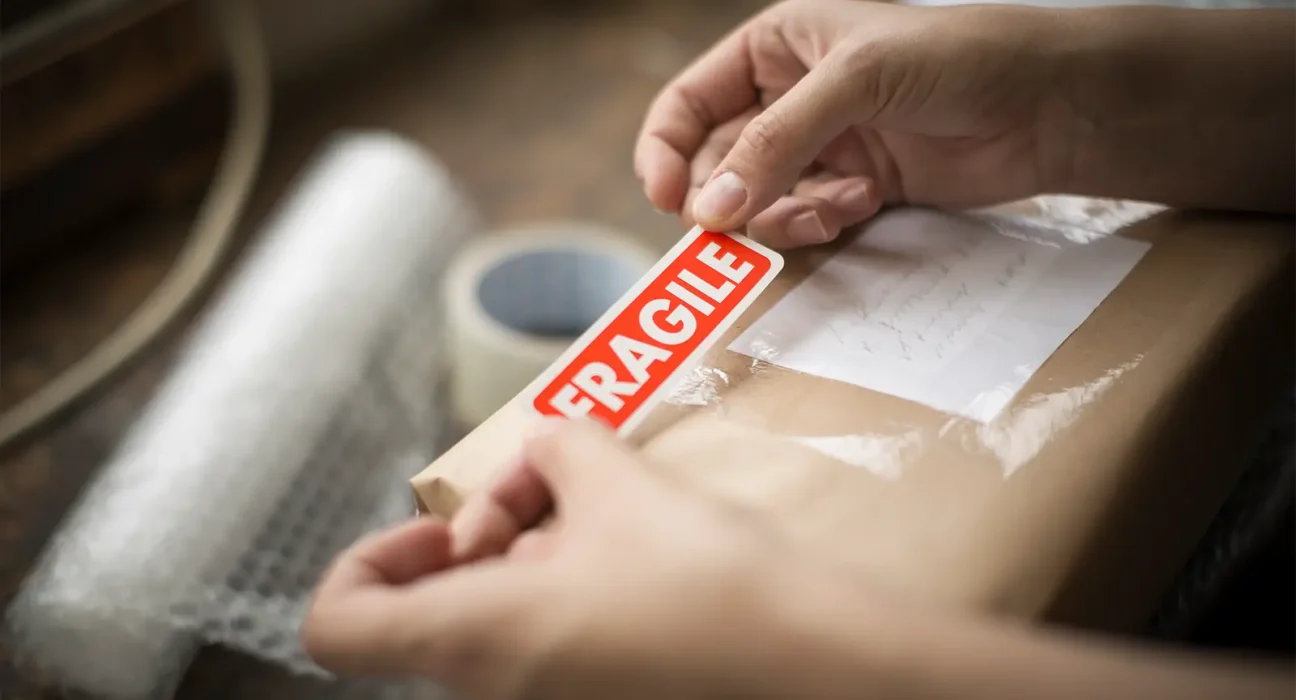
Clearly label the box “FRAGILE” and indicate which side should go up. Use bold markers to ensure that the label is easily readable.
Fragile Moving Tips for Specific Items
Some fragile items require special attention. Following are the tips to take care of the valuables according to their type:
Glassware and Stemware
– Wrap each piece individually with bubble wrap.
– Use cardboard dividers to separate items within the box.
– Fill hollow items, such as glasses, first with crumpled paper to provide additional support.
Plates and Dishes
– Wrap each plate in packing paper, placing them vertically (not flat) into the box.
– Place foam sheets between stacked plates to prevent them from touching each other.
Mirrors and Artwork
– Mask across the surface in an “X” with masking tape, taping into a box will lessen any chance of shattering.
– Wrap in bubble wrap, securing with tape.
– Get custom-sized boxes for your mirrors or pieces of artwork.
Electronics
– Wherever possible, use the original packaging.
– Wrap the screens or sensitive areas with foam sheets.
– Place all cords and accessories in labeled bags so they remain easy to identify.
Antiques and Heirlooms
– If any antique items are of a particularly high value, consider consulting a professional moving company.
– Use extra padding and a double-boxing method for maximum protection.
Additional Tips for Safeguarding Valuables
1. Don’t Overpack Boxes
Overpacking results in overweight and increases the probability of damage. Boxes should be kept manageable and easily carried.
2. Consider Climate Conditions
Fragile items, such as candles or some electronics, may benefit greatly from protection against changes in temperature. If so, consider climate-controlled transportation.
3. Pack a “No-Touch” Box
For very valuable or sentimental items, pack them in a special box that you keep with you during the move, rather than in the moving truck.
4. Hire Professionals
If you are unsure about packing certain items, consider hiring professional movers who specialize in handling fragile goods.
Common Mistakes to Avoid
During packing fragile items, be wary of these common mistakes:
– Flimsy Boxes: Weak boxes might collapse or tear apart easily. Always go for quality.
– Forgetting to Label: Not labeling fragile boxes may lead to their being treated as other boxes.
– Rushing It Through: Quickening the process increases the tendency for flaws. Go slowly and pack well.
– Not Taking Care of Weight Distribution: The inability to distribute weight correctly can lead to the toppling over and breaking of boxes. Distribute weight appropriately.
The Significance of Insurance
No matter how efficiently you pack, there is always room for accidents to occur. Get moving insurance to cover your valuables. This way, in case of loss or damage while moving, you are covered and will be compensated.
Safe Unpacking
When you have reached your desired destination, unpack fragile items with extra care. Here is how you do it:
1. Open boxes labeled “FRAGILE” first.
2. Remove padding materials slowly in order not to slip up and have some items break during unpacking.
3. Check each item for damage while unpacking.
Conclusion
Packing fragile items can be intimidating, but it is completely doable if you approach it correctly. With the right materials, proven packing techniques, and precautions taken, valuables can be safeguarded, and a move can go without hitches.
Whether you are making an across-the-country move or just moving down the street, these fragile moving tips will give you confidence as you pack fragile items. Remember, the secret to a successful and stress-free move is in careful preparation.