AI in Healthcare: How Artificial Intelligence is Revolutionizing Patient Care
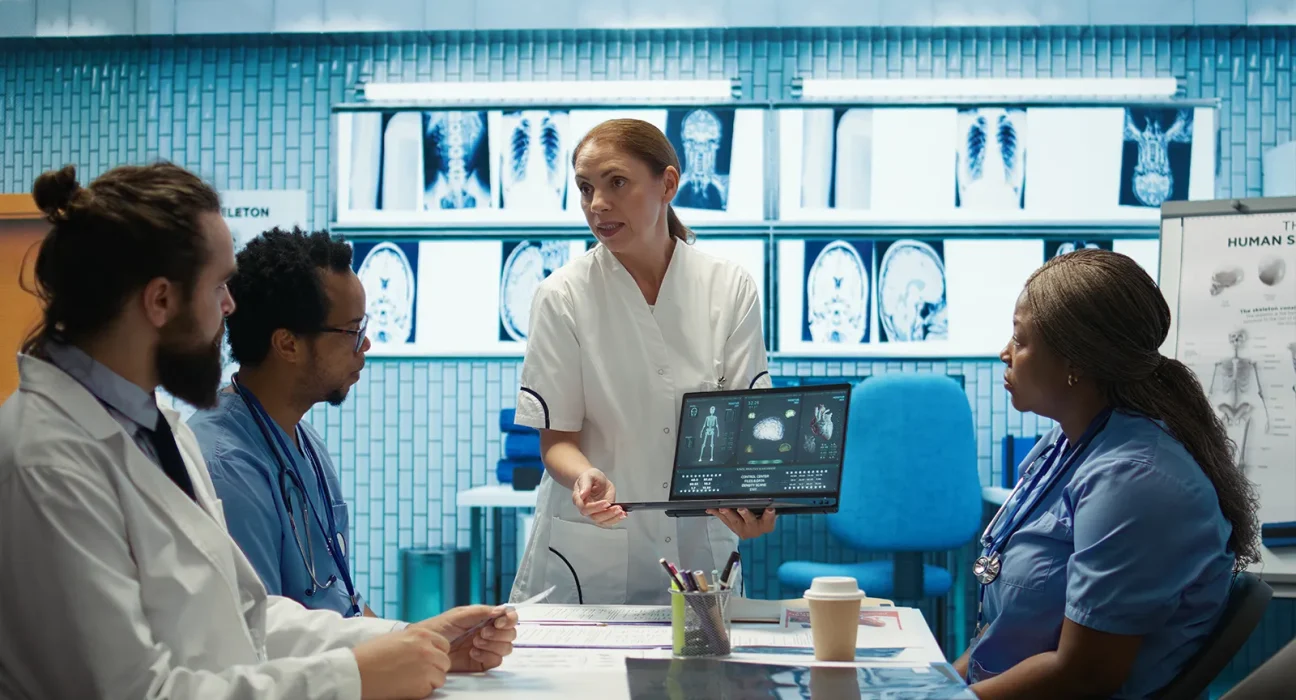
The invention of artificial intelligence has taken the world by surprise, and this has been manifested in the application of AI to healthcare. Therefore, AI improves patient care in various ways through streamlining hospital workflows and innovation in medical gadgets. From diagnostic to treatment pathways, AI can shape the feature of healthcare interventions. This review article will assess how artificial intelligence is changing healthcare, its accompanying benefits, and the challenges thereof.
1. The Role of AI in Health
AI is used in a variety of ways in healthcare: analyzing big data, spotting patterns, and giving insights of great value to doctors in order to make informed decisions. It finds its applications in diagnostics, treatment planning, patient monitoring, and administrative tasks.
Key Applications of AI in Healthcare:
- Medical Imaging and Diagnostics: AI amplifies radiology, pathology, and medical imaging to spot abnormalities more accurately and much faster.
- Predictive analytics: AI predicts outbreaks in diseases and at-risk patients with the help of their medical history and genetic data.
- Robotic-assisted surgeries: AI-powered robots assist surgeons in performing minimally invasive procedures.
- Virtual health assistants: Chatbots and AI-powered apps dole out medical advice and set up appointments.
- Personalized medicine: AI looks over an individual’s genetic data to recommend treatments tailored just for them.
The use of AI with various forms of medical technology does not only saves time but saves lives as well.
2. AI in Diagnostics: Enhancing Accuracy and Speed
Medical diagnostics remains one of the most promising fields where artificial intelligence can be utilized in healthcare. AI algorithms may analyze medical images, lab test results, and patient histories to detect the potential presence of any disease in the early stages.
AI in Medical Imaging:
By using AI, cancer, tumors, and even fractures may be detected from X-rays, MRIs, and CT scans. The models help the radiologist in pinpointing patterns that can be subtle or minute, even for a naked human eye. AI has proved helpful in detecting diseases related to Alzheimer’s, diabetic retinopathy, and cardiovascular ailments.
Why It Matters:
It reduces diagnosis-related errors, hastens the detection process, thereby improving outcomes due to early interventions.
3. AI in Treatment Planning and Personalized Medicine
AI is making treatment planning quite revolutionary, from personalized medicine to treatments designed for a particular patient, keeping his or her genetic makeup in consideration, coupled with medical history.
How AI Enhances Treatment:
- AI helps analyze data from patients to suggest treatment plans.
- It predicts the response of patients to certain medicines.
- AI supports oncologists in choosing the best cancer therapies by considering genetic profiling.
Why It Matters:
Precision medicine ensures better treatment outcomes, has fewer side effects, and enables quicker recoveries for patients.
4. AI-Powered Robotics in Surgery
Medical technology advancement led to the introduction of AI-powered surgical robots to assist surgeons in conducting difficult surgeries.
How AI Helps in Surgery:
- Precision and accuracy: AI-powered robots improve surgical precision; therefore, risks are reduced.
- Minimally invasive procedures: With robotic-assisted surgery, incisions made are small, which enables faster recovery and less pain.
- Real-time feedback: AI feeds surgeons with information on the patient during operations.
Why It Matters:
AI-powered robotic surgery has better patient safety and improved surgical outcomes, enabling procedures to be less invasive and more efficient.
5. AI in Remote Patient Monitoring and Telemedicine
AI in healthcare is making remote patient monitoring and telemedicine more mainstream, allowing doctors to provide services outside the hospital.
Role of AI in Remote Healthcare:
Wearable devices, powered by AI, monitor heart rate, blood pressure, and oxygen level. Immediate medical advice and counseling through AI-powered chatbots. Through virtual consultations, AI is involved in analyzing symptoms and providing likely diagnoses. Why It Matters: AI enables patients to be remotely monitored without going to the hospitals very frequently because diseases can thus be treated timely before they go serious.
6. AI in Drug Development and Discovery
AI is hastening drug development by making sense of complicated biological data and predicting which compound a drug will be most effective at. AI accelerates identification of promising drug candidates, machine learning models predict drug interactions and side effects, and AI cuts time and cost to bring new drugs to market.
Why It Matters:
AI-driven drug discovery leads to faster development of lifesaving medications and better treatment options for a wide range of diseases.
7. AI in Administrative Healthcare Tasks
Besides direct patient care, artificial intelligence is also making transformational changes at the administrative levels in healthcare centers.
How AI Enhances Administrative Efficiency:
- AI automates patient data entry and management of medical records.
- Chatbots help with appointment scheduling and answer basic queries of patients.
- AI streamlines insurance claims processing and billing.
Why It Matters:
In addition, automation of administrative tasks frees the time of healthcare professionals for patient care, thereby preventing burnout and improving efficiency within hospitals.
8. Challenges and Ethical Considerations of AI in Healthcare
While AI offers so much potential, its implementation into healthcare brings several challenges and raises a variety of ethical concerns that must be overcome.
Key Challenges:
- Data privacy and security: ensuring data of patients is kept safe from cyber threats.
- Bias in AI algorithms: AI models must be trained on diverse data sets to avoid biased decisions.
- Lack of human oversight: AI should complement medical professionals, not replace them.
Why It Matters:
Overcoming these challenges is necessary for the proper and appropriate use of AI within the medical sector.
9. Future of AI in Healthcare
The future for AI in health care is dazzling, with further advances yet to come that continue to reshape the way patient care is delivered.
Emerging Trends:
- AI-enabled predictive analytics helps to avoid disease before symptoms start to appear.
- Moreover, blockchain technology has the potential to enhance data security in healthcare systems.
- AI will continue to develop robotic-assisted surgeries for better precision.
Why It Matters:
Continued medical technology innovation translates into more efficient, accessible, and personalized solutions for patients all over the world.
10. AI and the Human Touch in Healthcare
With AI changing the face of healthcare, the human touch remains unreplaceable. Compassion, empathy, and ethical decision-making are part of medical care that AI cannot replace.
Balancing AI and Human Expertise:
- AI strengthens doctors’ capability but does not replace them.
- Human judgment is required in complex ethical decisions with regard to the care of a patient.
- Health professionals’ emotional support is somewhat important for the patients.
Why It Matters:
The best health outcomes are derived by combining artificial intelligence with experiences, empathy, and intuition from human medical experts.
Conclusion
AI is revolutionizing the field of healthcare by enhancing diagnostics, treatment planning, robotic-assisted surgeries, and even telemedicine. Due to the improvement in medical technology, AI enhances efficiency and reduces costs, making healthcare more accessible.
It will need to overcome many obstacles, including data privacy and AI bias, among other ethical considerations, if it is ever to serve responsibly. While artificial intelligence plays an important role in modern medicine, the human element cannot be replaced in bringing compassionate and ethical healthcare.
As technology continues to evolve, the integration of AI in healthcare will lead to better patient outcomes, improved efficiency, and a new era of medical innovation. By embracing AI responsibly, the healthcare industry can revolutionize patient care and improve lives worldwide.